
Fundamentals
What Is Sphatik?
A Complete Beginner's Guide to India's Most Revered Quartz Crystal
Fundamentals
A Complete Beginner's Guide to India's Most Revered Quartz Crystal
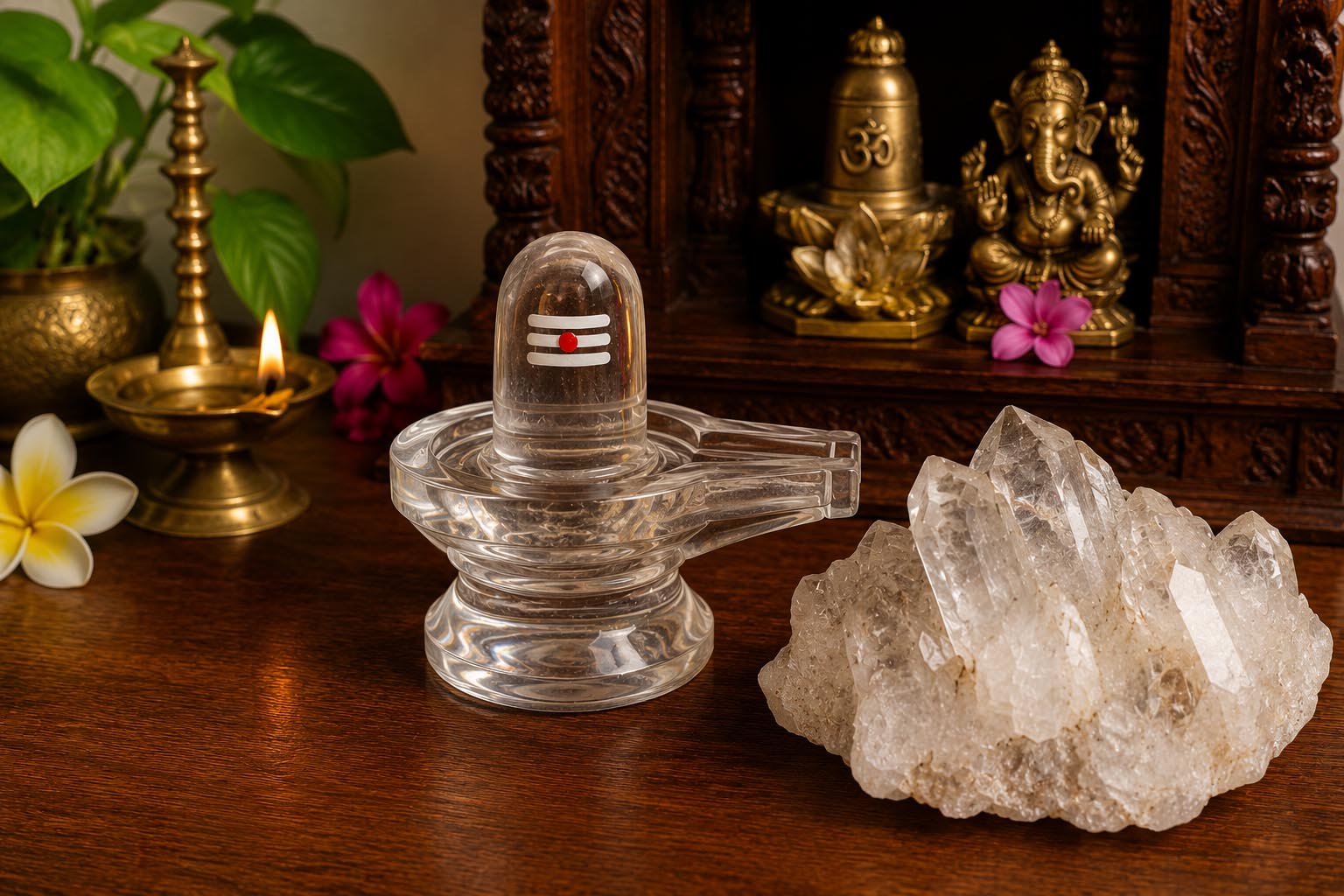
If you've ever seen a clear crystal mala, a Sphatik Shivling, or a transparent crystal placed in a home temple, you've already encountered Sphatik.
For many people in India, Sphatik is familiar long before they know what it actually is. It appears in places of worship, meditation spaces, spiritual practices, and family traditions. Yet surprisingly few people stop to ask a simple question:
What exactly is Sphatik?
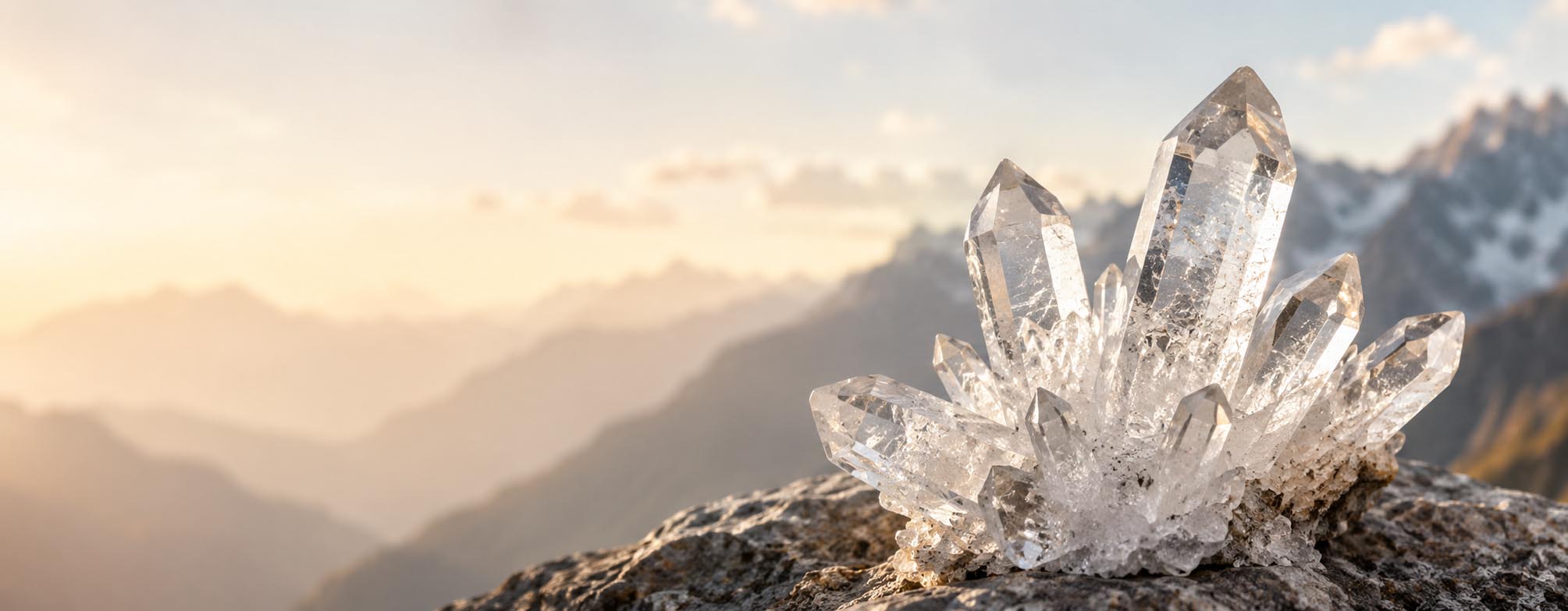
At its core, Sphatik is the traditional Indian name for natural clear quartz, a transparent crystalline mineral found in nature. Known for its clarity, durability, and natural beauty, it has been valued for centuries across different cultures and traditions.
Some people appreciate Sphatik purely for its appearance. Others value it because of its place in Hindu spiritual traditions, where it is commonly used for malas, Shivlings, Shri Yantras, and devotional articles. Many are also drawn to the traditional beliefs and symbolism associated with it.
Whatever the reason, understanding what Sphatik is begins with understanding both its natural origin and its long-standing cultural significance.
Yes.
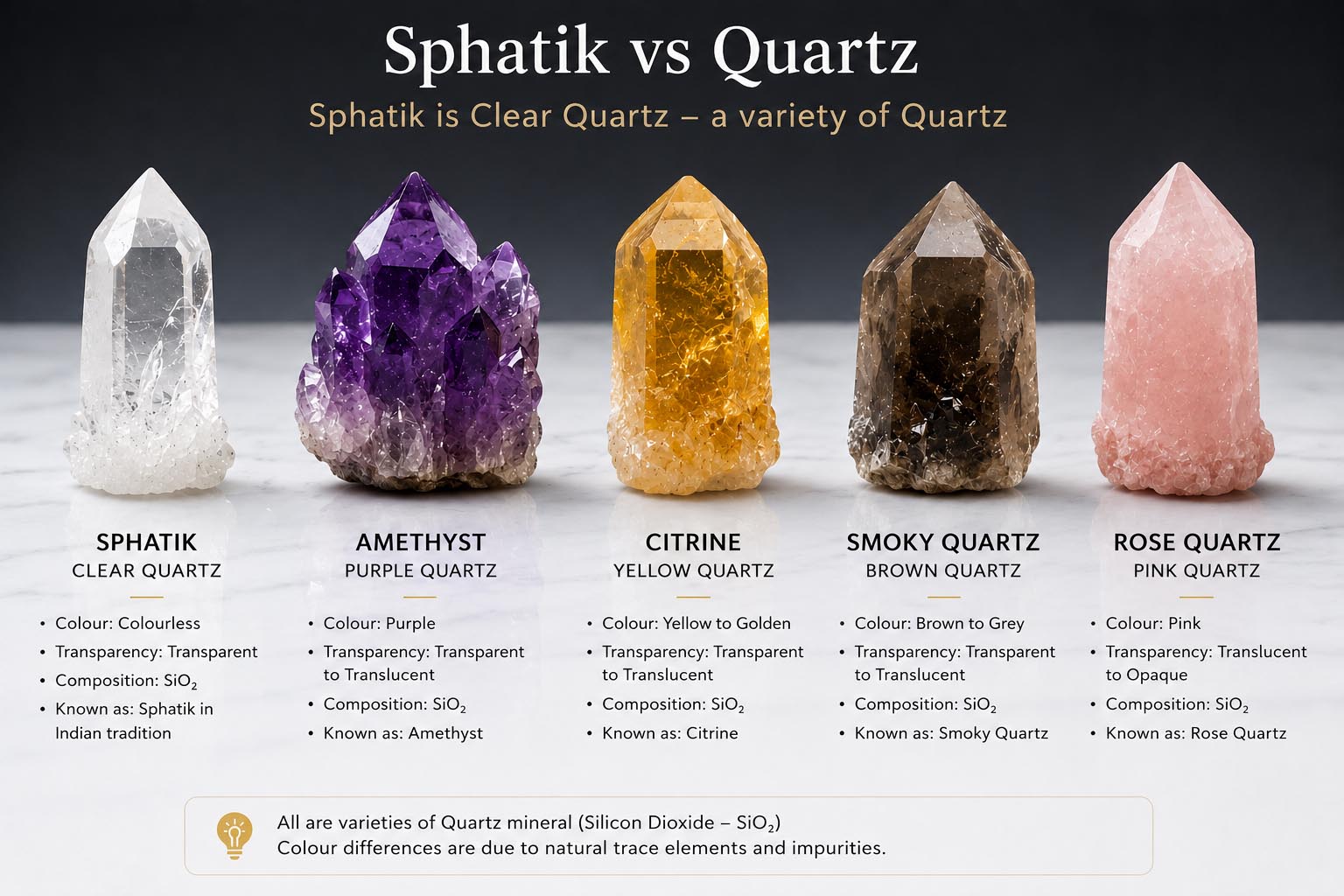
Sphatik is the traditional Indian name commonly used for clear, transparent quartz.
In scientific terms, quartz is one of the most abundant minerals found on Earth. It is composed primarily of silicon and oxygen and occurs in many different varieties. Some forms of quartz are coloured, such as amethyst, citrine, rose quartz, and smoky quartz.
Sphatik refers specifically to the clear and colourless variety of quartz.
In other words:
Quartz is the broader mineral family.
Sphatik is the clear variety of quartz commonly recognised in Indian tradition.
This is why the terms are often used interchangeably when referring to transparent crystal malas, Shivlings, and other sacred articles.
Part of the answer lies in its appearance.
Natural Sphatik has a unique clarity that immediately attracts attention. Even a simple crystal bead can reflect and transmit light in a way that feels elegant and timeless.
Unlike many materials that are manufactured or artificially coloured, Sphatik forms naturally over long periods within the Earth. Every piece develops under slightly different conditions, which means no two crystals are exactly alike.
For generations, people have appreciated these natural variations. Small inclusions, slight cloudiness, and differences in transparency are often seen not as flaws, but as characteristics that make each piece unique.
Its combination of beauty, durability, and natural origin is one reason Sphatik continues to be valued today.
Sphatik has held a special place in Indian spiritual and cultural traditions for centuries.
It is commonly used in:
Sphatik Malas
Sphatik Shivlings
Shri Yantras
Deity idols and sacred articles
Meditation and prayer practices
Its transparent appearance has traditionally been associated with qualities such as clarity, purity, and simplicity.
Because of these associations, Sphatik became widely used in devotional settings and remains one of the most recognised crystal materials in Hindu spiritual practice.
Different traditions may attach different meanings and beliefs to Sphatik, but its presence across temples, homes, and spiritual communities has remained remarkably consistent over time.
People are drawn to Sphatik for different reasons.
Some appreciate its natural beauty and timeless appearance.
Some choose it because it has been part of their family's traditions for generations.
Others are interested in the traditional spiritual and astrological beliefs associated with it.
And many simply want an authentic natural crystal article that carries cultural and devotional significance.
Whatever the reason, Sphatik remains one of the most recognised and widely respected crystal materials in India.
Its appeal lies not in a single belief or tradition, but in the combination of nature, craftsmanship, history, and symbolism that has surrounded it for centuries.
Sphatik is the traditional Indian name for natural clear quartz, a transparent crystal formed naturally within the Earth.
Known for its clarity and natural beauty, it has been used for generations in malas, Shivlings, sacred objects, and devotional practices. While traditions and beliefs surrounding Sphatik may vary, its place in Indian culture has remained enduring.
Whether you are exploring Sphatik for spiritual practice, personal devotion, traditional beliefs, or simply an appreciation of natural crystals, understanding what it is provides the foundation for understanding why it continues to be valued today.